... is called Harry Potter and the Deathly Hallows.
You heard it here.
(Unless you, too, have read the latest Borders newsletter.)
If you are one of those people who hates the whole Harry Potter phenomenon, would you mind controlling your impulse to leap into the comments box and say so, presumably for no other reason than the desire to behave like a prat? Ta.
Friday, December 22, 2006


Bucketing down
Having practically forgotten what rain looked like, I didn't think to clear out the mush of leaves, unseasonably scorched and fallen, that had been breeding with the last of the bottlebrush litter in the gully-trap, even though I knew a storm was coming.
And that, Reader, was why 10 pm tonight found me sopping wet from head to foot, out in the deluge (sur moi, le deluge) and desperately wading though ankle-deep water on the flooded path to the garden shed, my way lit only by a non-waterproof torch (since the electrical storm had knocked out the power) and the frequent cracking flashes of lightning, to find a shovel to scrape out the muck of ages and let through the water that had flooded and overflowed, backed up down the unrelenting cement path and flooded the garden shed and the garage.
This is an old house and it could have been worse; it could have backed up the toilet as well. It has done so more than once before today. So far there's no sign of such a thing.
I may, of course, be speaking too soon.
And that, Reader, was why 10 pm tonight found me sopping wet from head to foot, out in the deluge (sur moi, le deluge) and desperately wading though ankle-deep water on the flooded path to the garden shed, my way lit only by a non-waterproof torch (since the electrical storm had knocked out the power) and the frequent cracking flashes of lightning, to find a shovel to scrape out the muck of ages and let through the water that had flooded and overflowed, backed up down the unrelenting cement path and flooded the garden shed and the garage.
This is an old house and it could have been worse; it could have backed up the toilet as well. It has done so more than once before today. So far there's no sign of such a thing.
I may, of course, be speaking too soon.
Fresh Cherry and Toasted Almond Ice Cream
Ingredients
1.5 cups cream
5 egg yolks
3/4 cup sugar
1 teaspoon vanilla essence
60g slivered almonds
500g ripe cherries
1/4 cup water
2 strips orange rind
2 teaspoons redcurrant jelly
Method
Heat the cream in a saucepan until is it bubbling on the edges.
Beat egg yolks with sugar until thick and gradually add the hot cream, stirring constantly. (NB wooden spoon is best.)
Return the mixture to the saucepan and heat, stirring until it has lightly thickened. Be careful not to let it boil. Remove from heat, flavour with vanilla, and stir occasionally till tepid. At this point, clingwrap over the surface will stop the custard forming a skin. Once it's cool, put it in the fridge.
While this custard mixture is cooling, toast the almond slivers on a tray in the oven, where they will burn extremely quickly if you don't watch them. Turn them once or twice till golden brown, then let cool on the tray. If you do this in advance, put them in a glass jar with a good lid and keep them in the fridge, but it's best to do it all together as the almonds stay crunchier.
Put cherries in a pan with water and orange rind, cover and leave to cook over a gentle heat until they are very soft. Add the redcurrant jelly, stir and let cool until you can remove the pips from the cherries. Puree stoned cherries in a food processor or blender, along with the bit of syrup in the pan. The puree should make one to one-and-a-quarter cups and it will contain tiny bits of cherry. Let it cool.
Mix cherry puree with custard. It should be a lurid fuchsia colour. If you're using an ice-cream maker, freeze the mixture acording to the directions, adding the toasted almonds at the finish.
Otherwise, freeze the ice-cream in metal trays in the freezer (personally I find a largish round cake pan is good) till it's just firm, then take it out and beat it thoroughly to mush with an electric beater, to break up the crystals. Add the nuts to the mush and return to freezer.
Best eaten within a day of freezing, or the nuts start to lose their crunch.
Serves four without accompaniments, six with. Suggested accompaniments: cherry compote, little meringues, langues de chat -- but probably not all of these things at once.
1.5 cups cream
5 egg yolks
3/4 cup sugar
1 teaspoon vanilla essence
60g slivered almonds
500g ripe cherries
1/4 cup water
2 strips orange rind
2 teaspoons redcurrant jelly
Method
Heat the cream in a saucepan until is it bubbling on the edges.
Beat egg yolks with sugar until thick and gradually add the hot cream, stirring constantly. (NB wooden spoon is best.)
Return the mixture to the saucepan and heat, stirring until it has lightly thickened. Be careful not to let it boil. Remove from heat, flavour with vanilla, and stir occasionally till tepid. At this point, clingwrap over the surface will stop the custard forming a skin. Once it's cool, put it in the fridge.
While this custard mixture is cooling, toast the almond slivers on a tray in the oven, where they will burn extremely quickly if you don't watch them. Turn them once or twice till golden brown, then let cool on the tray. If you do this in advance, put them in a glass jar with a good lid and keep them in the fridge, but it's best to do it all together as the almonds stay crunchier.
Put cherries in a pan with water and orange rind, cover and leave to cook over a gentle heat until they are very soft. Add the redcurrant jelly, stir and let cool until you can remove the pips from the cherries. Puree stoned cherries in a food processor or blender, along with the bit of syrup in the pan. The puree should make one to one-and-a-quarter cups and it will contain tiny bits of cherry. Let it cool.
Mix cherry puree with custard. It should be a lurid fuchsia colour. If you're using an ice-cream maker, freeze the mixture acording to the directions, adding the toasted almonds at the finish.
Otherwise, freeze the ice-cream in metal trays in the freezer (personally I find a largish round cake pan is good) till it's just firm, then take it out and beat it thoroughly to mush with an electric beater, to break up the crystals. Add the nuts to the mush and return to freezer.
Best eaten within a day of freezing, or the nuts start to lose their crunch.
Serves four without accompaniments, six with. Suggested accompaniments: cherry compote, little meringues, langues de chat -- but probably not all of these things at once.
Saturday, December 16, 2006
Indecency
I see in today's Advertiser that Peter Costello, en passant while discussing the likelihood that he will be in a wheelchair before he gets the top job (if then), has paid what he obviously thinks is tribute to the departed Kim Beazley by calling him 'a decent man'.
This must be the fourth or fifth time since he lost the leadership that I've seen this word applied to Beazley, and every time it has been said as though 'decent' were a high accolade, the nicest thing you could possibly say about someone, and a truly rare occurrence in the sulphurous air of Parliament House.
(No prizes for hearing the other shoe drop at this point.)
There are two very scary things about this.
(1) It suggests that decency in general is a rare and prized commodity, rather than the norm one would hope and believe it ought to be. Basic decency ought to be a starting point in the human character, not some kind of rarefied hard-won personal quality.
(2) It lends itself to one of the classic fallacies of Logic 101: 'Beazley is decent and lost the leadership, therefore he must have lost the leadership because of his decency.' This in turn suggests that only bastards should ever be elected to leadership positions.
It is of course in many people's interests to believe that a decent man is a man who will get the elbow. It provides such a magnificent excuse, after all, for behaving like a psychotic prick.
But five minutes' thought will recall that Beazley lost the Labor leadership for other reasons. He lost in spite of his decency, not because of it.
This must be the fourth or fifth time since he lost the leadership that I've seen this word applied to Beazley, and every time it has been said as though 'decent' were a high accolade, the nicest thing you could possibly say about someone, and a truly rare occurrence in the sulphurous air of Parliament House.
(No prizes for hearing the other shoe drop at this point.)
There are two very scary things about this.
(1) It suggests that decency in general is a rare and prized commodity, rather than the norm one would hope and believe it ought to be. Basic decency ought to be a starting point in the human character, not some kind of rarefied hard-won personal quality.
(2) It lends itself to one of the classic fallacies of Logic 101: 'Beazley is decent and lost the leadership, therefore he must have lost the leadership because of his decency.' This in turn suggests that only bastards should ever be elected to leadership positions.
It is of course in many people's interests to believe that a decent man is a man who will get the elbow. It provides such a magnificent excuse, after all, for behaving like a psychotic prick.
But five minutes' thought will recall that Beazley lost the Labor leadership for other reasons. He lost in spite of his decency, not because of it.
If experience is the best teacher, why do I never learn?
Hot tree-decorating tip: put the dangly baubly things (Austrian glass teddy, crystal cat, silver snowflake balls, Scottish bunny-in-a-wreath, pearly icicles etc etc etc) on the tree BEFORE you wind the slippy stringy things (red tinsel, gold star garland, string of red beads and pearly ditto) around the branches to define the shape of the tree.
I made this mistake last year and had to take the whole thing apart and do it again. Just like this year.
They say you have to repeat something consciously at least 21 times, or is it 27, in order to establish it as a habit. If that's the case then I will be well into my *coughcoughseventiescoughcoughcough* before I automatically decorate the tree in the order that works.
One of the cats sat in Sphinx position on the mantelpiece, paws tucked over the edge, and watched the whole thing over my shoulder. I pray that she has now lost interest.
I made this mistake last year and had to take the whole thing apart and do it again. Just like this year.
They say you have to repeat something consciously at least 21 times, or is it 27, in order to establish it as a habit. If that's the case then I will be well into my *coughcoughseventiescoughcoughcough* before I automatically decorate the tree in the order that works.
One of the cats sat in Sphinx position on the mantelpiece, paws tucked over the edge, and watched the whole thing over my shoulder. I pray that she has now lost interest.
Blogging the cricket
Why didn't somebody tell me that Gideon Haigh is blogging the cricket?
Actually I don't think I've got a single friend who's into both blogging and cricket. But still.
Eye on the Ashes is here.
Actually I don't think I've got a single friend who's into both blogging and cricket. But still.
Eye on the Ashes is here.
Thursday, December 14, 2006
Astonishingly relevant anniversary post
Inspired by ThirdCat's blogiversary post, I looked back at my own archived post for December 14, 2005, and this (see link for the whole article) is what I found :
If it's good enough for him ...
Longtime Fatwa victim Salman Rushdie on the realities and the virtues of multiculturalism:
"This is the question of our time: how does a fractured community of multiple cultures decide what values it must share in order to cohere, and how can it insist on those values even when they clash with some citizens’ traditions and beliefs?
The beginnings of an answer may be found by asking the question the other way around: what does a society owe to its citizens? The French riots demonstrate a stark truth. If people do not feel included in the national idea, their alienation will turn to rage."
If it's good enough for him ...
Longtime Fatwa victim Salman Rushdie on the realities and the virtues of multiculturalism:
"This is the question of our time: how does a fractured community of multiple cultures decide what values it must share in order to cohere, and how can it insist on those values even when they clash with some citizens’ traditions and beliefs?
The beginnings of an answer may be found by asking the question the other way around: what does a society owe to its citizens? The French riots demonstrate a stark truth. If people do not feel included in the national idea, their alienation will turn to rage."
Wednesday, December 13, 2006
How To Tell Whether It's Christmas: a Quiz (multiple choice)
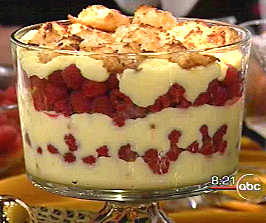
You know it's Christmas when
a) the pianist in David Jones is playing carols instead of the Moonlight Sonata or I Could Have Danced All Night.
b) you're momentarily blinded at the wheel by the sun reflecting off the tinsel in the neighbours' rose bushes.
c) you can't even get into the corridor where the loo is at Myer, because it's full of what turns out to be a single extended family of young women and small, crying children clutching helium balloons who have all decided to go to the loo together.
d) you realise you've put your hand up for potato salad and trifle, which means you'll have to make both mayonnaise and custard, which means a trip to the Central Market in the middle of the Christmas crowds to get the good free-range Kangaroo Island eggs. Again.
e) you've got little paper cuts all over your tongue.
Memo to the Smith Family and the Salvos: the cards are very nice, dudes, but could you do something about the edges of the envelope flaps?
Friday, December 08, 2006
Some days you make the choice, some days the choice makes you
There have of late, in my corner of the blogosphere, been a number of brilliantly written and pensive posts (see links below) about the balancing, for women, of life and work, about creativity of both the Artist and the Offspring varieties, about choices made and chances lost, about what we choose and why we choose it and how we react when the gods step in and deliver some cruel, wild blow of chance.
The most recent of these posts is Ampersand Duck's heartbreaking tale of her recent days, and the end of what she says is her last attempt at having a second child.
A. Duck and I share a gynaecological peculiarity -- she's talked about it somewhere on her blog, but I can't find it -- that makes it considerably more difficult to have children and may explain, in my case, why I'm practically the only woman of my age I know who has never accidentally conceived. Or not, at least, to my knowledge; apparently, very early miscarriages can sometimes disguise themselves as a particularly challenging period, so you'd never know for sure.
I don't have kids, being from a generation of women for whom if you wanted to survive in academe it was almost fatal to get pregnant, and almost impossible to establish, develop and sustain the kind of relationship you'd want to be well into before you even thought about having kids. (Some years ago I wrote a whole essay about what academic life used to be like for women, and no doubt to some extent still is: it's here.)
By the time I got out of the academy, the maternal moment was well past; I think the day I realised that particular option had closed was the day the man in the furniture van delivered my new sofa, and I looked at its blinding, spotless whiteness and realised my subconscious had spoken.
I'd made a series of smaller situational choices along the way, choices about career and money and blokes and circs, but on the whole my non-maternal status had been an incremental closing-down, more like Gertrude Stein's line about her gradual estrangement from her brother: 'Little by little we never met again.'
The strange (normal for cats, though: I swear that this is true) malformation of the girly bits and the resulting limited capacity for (human) childbearing was only discovered in my late 40s when I went through a girly-bits reckoning with which I shall not bore you. Suffice it to say that when I looked back on the infinite time, trouble, money and mess involved over my decades of careful contraception, the irony of it struck me dumb for days.
Before this discovery, there was also the truly ghastly moment at which the gynaecologist, almost young enough to be my daughter, looked me sternly in the 47-year-old eye and said firmly 'Now, before we go on, is there any chance at all that you could be pregnant?'
I had opened my mouth to say 'Don't be silly, people my age don't get pregnant' when I remembered that she was, after all, a gynaecologist. The words died on my lips.
I thought about it.
Slowly and carefully, I lowered my head to her desk and banged it a couple of times. Hard.
Silently, she handed me a specimen jar and pointed down the hall to the loo.
Negative, of course. But in the interval between the head-banging and the test-checking, I faced a number of hard questions. Hypothetical father: impossible. Income: shoestring freelance. Age at the hypothetical child's 21st birthday party: 68. And yet, and yet ...
It wasn't the worst moment of my life, but it's on the shortlist.
But it's not really a matter of sadness or regret for me, not having kids. I would not have been the world's greatest mum by a very long way. I am absent-minded, and a bit over-anxious about the helpless and vulnerable. I dislike being financially or emotionally dependent on anyone else even for a short time, and I dislike being interrupted when reading or writing or thinking. Someone's had a lucky escape.
For those who think my absence of angst about this makes me an unnatural woman, I can only reply that what it makes me is an un-cultural woman. We live in a culture still deeply, deeply steeped in the notion that a woman with no children is some kind of pitiable freak, and a woman with no children who isn't hysterical about her childlessness must be evil as well. I've been fortunate in the circles in which I move, where those views aren't widely held.
Which brings me to my real point. Thinking about A. Duck's experiences and my own reproductive non-history brings to mind Virginia Hausegger, who is a former student of mine, so I am no doubt one of the traitorous feminists she blames for the fact that she has no children, because of 'the golden promises of our feminist foremothers' (NB: I don't know who she'd been reading, I'm sure) that she could 'have it all'.
But the very notion of being 'betrayed by feminism' is kind of bizarre. Those who live by any ideological framework and personalise it enough to be able to feel 'betrayed' by it when it doesn't meet their expectations were playing a mug's game in the first place.
My own take on this question is the exact opposite: feminism has helped me make my way through what has not, at this time and in this place, been a particularly typical woman's life. It's shown me that I had choices, shown me what they were, predicted (rightly) what the difficulties would be, given me a framework for understanding and dealing with those difficulties, and given me a vocabulary in which to think and talk about them. Institutional feminism, 20 years ago, provided for me a brand-new Equal Opportunity Officer with whose help I negotiated the crucial point in my academic career. Literary feminism, all my adult life, has given me an array of models for a thinking, reading, writing life without children: Virginia Woolf, George Eliot, Katherine Mansfield, Jane Austen, Christina Stead, Colette, the Simones Weil and de Beauvoir and countless others.
I don't know what my life would have been like if I'd had kids, or how different it would have been. I've seen and done enough in life to know just how chancy the whole reproductive business is. But anyone who'd like to see me wringing my hands and wailing about having produced no Pavlov's Kittens for posterity is going to have to wait a bloody long time.
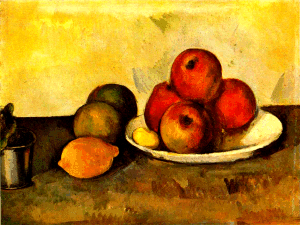
Lest some ill-willed sod should ever turn up with a camera in one hand and an overblown sense of symbolism in the other, however, there's always fruit in my bowl. Just in case.
More texts for Life Management for Women 101. Perhaps an anthology ... :
Ampersand Duck
Stephanie
ThirdCat
Elsewhere
Kate Moment
Heroines, every one.
The most recent of these posts is Ampersand Duck's heartbreaking tale of her recent days, and the end of what she says is her last attempt at having a second child.
A. Duck and I share a gynaecological peculiarity -- she's talked about it somewhere on her blog, but I can't find it -- that makes it considerably more difficult to have children and may explain, in my case, why I'm practically the only woman of my age I know who has never accidentally conceived. Or not, at least, to my knowledge; apparently, very early miscarriages can sometimes disguise themselves as a particularly challenging period, so you'd never know for sure.
I don't have kids, being from a generation of women for whom if you wanted to survive in academe it was almost fatal to get pregnant, and almost impossible to establish, develop and sustain the kind of relationship you'd want to be well into before you even thought about having kids. (Some years ago I wrote a whole essay about what academic life used to be like for women, and no doubt to some extent still is: it's here.)
By the time I got out of the academy, the maternal moment was well past; I think the day I realised that particular option had closed was the day the man in the furniture van delivered my new sofa, and I looked at its blinding, spotless whiteness and realised my subconscious had spoken.
I'd made a series of smaller situational choices along the way, choices about career and money and blokes and circs, but on the whole my non-maternal status had been an incremental closing-down, more like Gertrude Stein's line about her gradual estrangement from her brother: 'Little by little we never met again.'
The strange (normal for cats, though: I swear that this is true) malformation of the girly bits and the resulting limited capacity for (human) childbearing was only discovered in my late 40s when I went through a girly-bits reckoning with which I shall not bore you. Suffice it to say that when I looked back on the infinite time, trouble, money and mess involved over my decades of careful contraception, the irony of it struck me dumb for days.
Before this discovery, there was also the truly ghastly moment at which the gynaecologist, almost young enough to be my daughter, looked me sternly in the 47-year-old eye and said firmly 'Now, before we go on, is there any chance at all that you could be pregnant?'
I had opened my mouth to say 'Don't be silly, people my age don't get pregnant' when I remembered that she was, after all, a gynaecologist. The words died on my lips.
I thought about it.
Slowly and carefully, I lowered my head to her desk and banged it a couple of times. Hard.
Silently, she handed me a specimen jar and pointed down the hall to the loo.
Negative, of course. But in the interval between the head-banging and the test-checking, I faced a number of hard questions. Hypothetical father: impossible. Income: shoestring freelance. Age at the hypothetical child's 21st birthday party: 68. And yet, and yet ...
It wasn't the worst moment of my life, but it's on the shortlist.
But it's not really a matter of sadness or regret for me, not having kids. I would not have been the world's greatest mum by a very long way. I am absent-minded, and a bit over-anxious about the helpless and vulnerable. I dislike being financially or emotionally dependent on anyone else even for a short time, and I dislike being interrupted when reading or writing or thinking. Someone's had a lucky escape.
For those who think my absence of angst about this makes me an unnatural woman, I can only reply that what it makes me is an un-cultural woman. We live in a culture still deeply, deeply steeped in the notion that a woman with no children is some kind of pitiable freak, and a woman with no children who isn't hysterical about her childlessness must be evil as well. I've been fortunate in the circles in which I move, where those views aren't widely held.
Which brings me to my real point. Thinking about A. Duck's experiences and my own reproductive non-history brings to mind Virginia Hausegger, who is a former student of mine, so I am no doubt one of the traitorous feminists she blames for the fact that she has no children, because of 'the golden promises of our feminist foremothers' (NB: I don't know who she'd been reading, I'm sure) that she could 'have it all'.
But the very notion of being 'betrayed by feminism' is kind of bizarre. Those who live by any ideological framework and personalise it enough to be able to feel 'betrayed' by it when it doesn't meet their expectations were playing a mug's game in the first place.
My own take on this question is the exact opposite: feminism has helped me make my way through what has not, at this time and in this place, been a particularly typical woman's life. It's shown me that I had choices, shown me what they were, predicted (rightly) what the difficulties would be, given me a framework for understanding and dealing with those difficulties, and given me a vocabulary in which to think and talk about them. Institutional feminism, 20 years ago, provided for me a brand-new Equal Opportunity Officer with whose help I negotiated the crucial point in my academic career. Literary feminism, all my adult life, has given me an array of models for a thinking, reading, writing life without children: Virginia Woolf, George Eliot, Katherine Mansfield, Jane Austen, Christina Stead, Colette, the Simones Weil and de Beauvoir and countless others.
I don't know what my life would have been like if I'd had kids, or how different it would have been. I've seen and done enough in life to know just how chancy the whole reproductive business is. But anyone who'd like to see me wringing my hands and wailing about having produced no Pavlov's Kittens for posterity is going to have to wait a bloody long time.
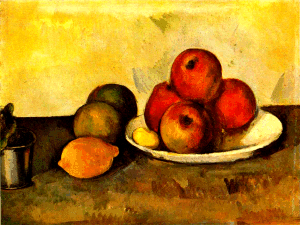
Lest some ill-willed sod should ever turn up with a camera in one hand and an overblown sense of symbolism in the other, however, there's always fruit in my bowl. Just in case.
More texts for Life Management for Women 101. Perhaps an anthology ... :
Ampersand Duck
Stephanie
ThirdCat
Elsewhere
Kate Moment
Heroines, every one.
Tuesday, December 05, 2006
Early days, but still ...
I know it's only the first week in December, but a hot contender for the Mind-Bogglingly Vacuous Statement of the Bloody Obvious division of the Sports Commentary Awards of the Summer has already emerged from the Channel Nine commentary box:
'And if England had had Shane Warne playing for them, they might have won this match.'
'And if England had had Shane Warne playing for them, they might have won this match.'
What book is that?
Does anybody recognise this book?
"And a recollection of trying to recall, in other years, a book I read as a child: somewhere, a warm kitchen scene where spices were special and rare, and had to be used carefully because the spice seller wouldn’t be coming to the house for another year. I can’t remember any more than this (how can I possibly hope to recover this book when this is all I can remember of it?), but the kitchen had something of the quality of Marmaduke Scarlett’s kitchen in The Little White Horse. I guess it's too much to hope this rings a bell with anyone?"
If it does, do be a petal and click over to Stephanie's, and tell her what it is. If it doesn't, go and have a read of her lovely posts about music, spice and summer anyway.
"And a recollection of trying to recall, in other years, a book I read as a child: somewhere, a warm kitchen scene where spices were special and rare, and had to be used carefully because the spice seller wouldn’t be coming to the house for another year. I can’t remember any more than this (how can I possibly hope to recover this book when this is all I can remember of it?), but the kitchen had something of the quality of Marmaduke Scarlett’s kitchen in The Little White Horse. I guess it's too much to hope this rings a bell with anyone?"
If it does, do be a petal and click over to Stephanie's, and tell her what it is. If it doesn't, go and have a read of her lovely posts about music, spice and summer anyway.
Sunday, December 03, 2006
The brutality of the panties

This brilliant (does she ever write any other kind?) patriarchy-blamin' post by Twisty Faster prompts me to ask a question I have long wondered about.
Girls, what word do you use for your underwear? Not bras, camisoles, thongs, teddies, fantasy garter belts and so on: your underpants.
[UPDATE: looking at this and the previous post together, I can now see that the subject of this one may have been suggested by the phrase 'pants-wetting' in the last one. Clearly I have some pants issues to work through.]
I've always found the word "panties" to have a major eewww factor; it has soft-porn associations that remind me of letters to Penthouse, and I think I also dislike that gratuitous diminutive -- it's a teeny-tiny girlie version of "pants".
My own preferred word is "knickers". What do other women call their underpants?
Hens' night at the Walkleys
All the excitable pants-wetting over Milne v Mayne at the Walkley Awards ceremony the other night has completely obscured the fact that it was women journalists who walked away with nearly all the top-line awards.
Chris Boyd has a nice post at Sarsparilla about the awards night; he describes the pleasure of a journo from Bendigo who, to his own surprise, won a Walkley for his work on the water crisis -- but whose moment in the spotlight got edited out of the SBS telceast to make way for a replay of the Mayne/Milne face-off.
Similarly, the women whose genuine achievements were recognised have gone almost unnoticed in the press's coverage of its own prize night.
For the record, then, here are the top eight awards:
Gold Walkley - Liz Jackson, Lin Buckfield, Peter Cronau, Four Corners, ABC TV: Stoking the Fires.
Nikon-Walkley Australian Press Photographer of the Year - Kate Geraghty, The Sydney Morning Herald: Lebanon.
Walkley for Journalism Leadership - Michelle Grattan, political editor, The Age, and political commentator, ABC Radio National Breakfast.
Walkley for Most Outstanding Contribution to Journalism - Colleen Egan, The Sunday Times.
Print News Report - Michael Beach and Viva Goldner, The Daily Telegraph: Marcus Einfeld.
Sport News Reporting - Danny Weidler, National Nine News: Russell's Rabbits.
Radio News Reporting - Tim Palmer, ABC Radio: Bali Suicide Bombings.
Investigative Journalism - Caroline Overington, The Australian and The Weekend Australian: AWB Kickback Scandal.
Chris Boyd has a nice post at Sarsparilla about the awards night; he describes the pleasure of a journo from Bendigo who, to his own surprise, won a Walkley for his work on the water crisis -- but whose moment in the spotlight got edited out of the SBS telceast to make way for a replay of the Mayne/Milne face-off.
Similarly, the women whose genuine achievements were recognised have gone almost unnoticed in the press's coverage of its own prize night.
For the record, then, here are the top eight awards:
Gold Walkley - Liz Jackson, Lin Buckfield, Peter Cronau, Four Corners, ABC TV: Stoking the Fires.
Nikon-Walkley Australian Press Photographer of the Year - Kate Geraghty, The Sydney Morning Herald: Lebanon.
Walkley for Journalism Leadership - Michelle Grattan, political editor, The Age, and political commentator, ABC Radio National Breakfast.
Walkley for Most Outstanding Contribution to Journalism - Colleen Egan, The Sunday Times.
Print News Report - Michael Beach and Viva Goldner, The Daily Telegraph: Marcus Einfeld.
Sport News Reporting - Danny Weidler, National Nine News: Russell's Rabbits.
Radio News Reporting - Tim Palmer, ABC Radio: Bali Suicide Bombings.
Investigative Journalism - Caroline Overington, The Australian and The Weekend Australian: AWB Kickback Scandal.
Friday, December 01, 2006
Jes' fetchin' mah banjo
The Channel Ten morning news broadcast I just watched featured a sports report on the first day of the Adelaide Test, complete with voxpop from the crowd outside the Adelaide Oval. The newsreader, presumably reading off the autocue, mentioned the "excited locals" more than once.
She made it sound like a Naomi Robson visit in a helicopter to my home town of Curramulka, pop approx 150. But even there, you'd be surprised by how laid-back and clued-up the locals are -- never mind a city of over a million people that has "excited locals" queuing up and hanging off the rafters at every session every other year at something called the Festival of Ideas.
Everybody always knew that Channel Ten's stupid abandonment of independent production of local news in Adelaide would be a bloody disaster, and so it has proved. Just excuse me here while I play a few bars of 'Duelling Banjos'. It's so much easier when you've got six fingers on each hand.
She made it sound like a Naomi Robson visit in a helicopter to my home town of Curramulka, pop approx 150. But even there, you'd be surprised by how laid-back and clued-up the locals are -- never mind a city of over a million people that has "excited locals" queuing up and hanging off the rafters at every session every other year at something called the Festival of Ideas.
Everybody always knew that Channel Ten's stupid abandonment of independent production of local news in Adelaide would be a bloody disaster, and so it has proved. Just excuse me here while I play a few bars of 'Duelling Banjos'. It's so much easier when you've got six fingers on each hand.
'Available in different strengths and colours'
From today's online ABC news:
'A German company plans to launch a spray-on condom tailor-made for all sizes.
The Institute for Condom Consultancy is developing a type of spray can into which the man inserts his penis first.'
All that's left to ask, really, is whether whoever came up with that 'firm hopes' headline did it on purpose or whether it was some kind of Freudian slip.
So to speak.
'A German company plans to launch a spray-on condom tailor-made for all sizes.
The Institute for Condom Consultancy is developing a type of spray can into which the man inserts his penis first.'
All that's left to ask, really, is whether whoever came up with that 'firm hopes' headline did it on purpose or whether it was some kind of Freudian slip.
So to speak.
Subscribe to:
Posts (Atom)